

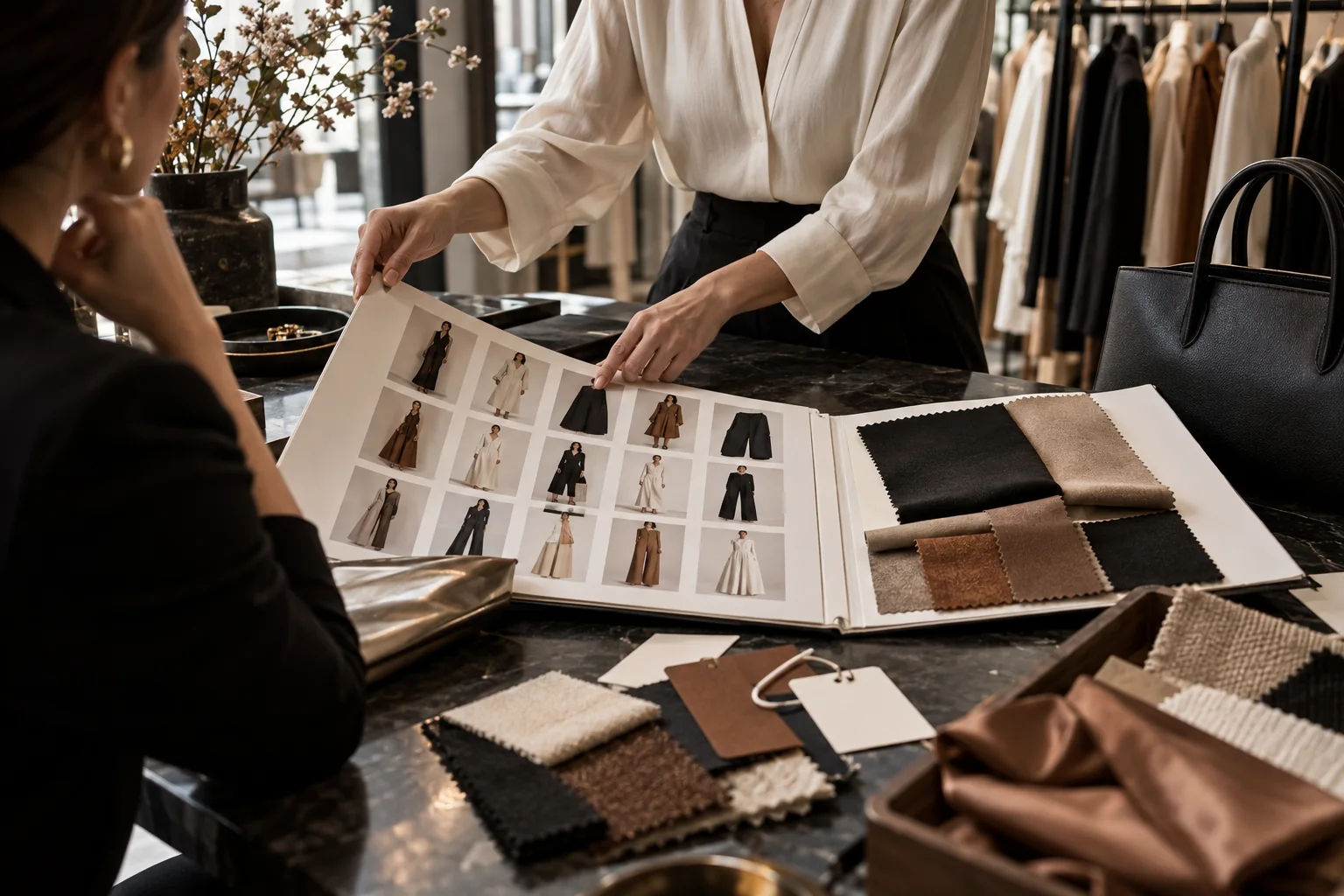
In short. A buyer purchases for a store and decides which pieces it will carry for the season. A showroom is a space where brands present their collections to buyers. In Dubai, you go to them when your brand can repeat an order on time, knows its wholesale price and brings clear materials: a line sheet, a lookbook and supply terms. First choose the type of deal: wholesale, consignment or a showroom. Then calculate the price and put every term in the contract.
1. Buyer, showroom, pop-up: what is the difference
- A buyer works for a store: a multi-brand boutique, a concept store, a department store or an online store. They buy collections for the season and are responsible for selling them.
- A showroom presents the collections of several brands to buyers. Some are permanent, others seasonal, around fashion weeks. A showroom may simply rent you space, or it may represent your brand and look for orders.
- A pop-up is a temporary store. You sell directly to customers and quickly see what they buy.
For a new brand in Dubai, I recommend starting with a pop-up or a place in a showroom. You will see how real customers and buyers react to the piece and the price. And you will come to the order conversation with facts, not expectations.
2. Are you ready for buyers
A buyer is not buying one beautiful piece but a reliable supplier. Before you contact buyers, answer honestly:
- Production. Can you repeat an order at the same quality and on time? Do you have a factory or workshop where this has been tested?
- Samples. Are your samples ready, and do they match exactly what will arrive at the store?
- Volume. How many pieces can you realistically produce in a season?
- Price. Do you know your wholesale price and recommended retail price?
- Cash. Do you have enough money to pay for production before the store pays you?
If even one question has no answer, start there. A first delivery that fails can close the door to a buyer for a long time.
If your brand comes from another country, read How to Bring a Clothing Brand to the UAE Market first: it covers import, customs duty and routes to market.
3. Three types of deal
Wholesale. The store buys the collection from you at the wholesale price and sells it to its customers itself.
- Pros: payment for the goods and a clear order size.
- Cons: the wholesale price is lower than retail, and the store decides how to present your brand.
Consignment. The store takes the pieces and pays only for what sells. It returns the rest.
- Pros: an easier way for a new brand to get into a store.
- Cons: the money comes later, and unsold stock remains your risk.
- What to write down: how often the store sends a sales report, when it pays, who is responsible for damaged or lost pieces, and when it returns unsold stock.
Showroom or agent. The showroom presents your collection to buyers and helps you get orders. Usually you pay for this: a fee for the space, a commission on orders, or both.
- Pros: access to buyers you do not know yourself.
- Cons: costs before the first orders, and nobody guarantees the result.
- What to ask: which buyers the showroom brings, which brands it already represents and what the fee includes.
I advise a new brand not to accept consignment without deadlines and reports. If the store asks for consignment, agree on a small first delivery and a fixed date when you will review the sales together.
4. Pricing for buyers
The store needs its own margin, so your wholesale price should be clearly below the recommended retail price and still cover your unit cost and your profit. If you work down from the retail price, it is easy to sell at a loss.
Add up:
- the unit cost: fabric, sewing, trims, labels, packaging;
- delivery to the store and, if the goods are imported, customs duty;
- your profit.
This gives you the minimum wholesale price. Then check that the recommended retail price is close to similar brands on the shelves in Dubai.
VAT. The standard VAT rate in the UAE is 5%. If your company is registered for VAT, state in the price list whether VAT is included.
The calculation is explained step by step in How to Price Clothing.
Checked against an official source on 17.11.2026: UAE Federal Tax Authority, VAT. The mandatory registration threshold is AED 375,000 in sales over 12 months (checked on 02.11.2026 for the article How to Price Clothing).
5. What to bring to the meeting
A buyer sees dozens of brands each season. Help them decide quickly:
- A line sheet: a catalogue for buyers with each style, its photo, style number, colours, sizes, wholesale price and recommended retail price. This is the key document of the meeting.
- A lookbook: the pieces styled in looks, so the buyer sees the whole collection.
- Samples: the same as those that will arrive at the store.
- A size chart, fabric composition and care.
- Terms: minimum order, delivery times, who pays delivery and duty, how and when payment is made, and what happens with defects.
- A short brand introduction: who your customer is, where you already sell, and links to your website and social media.
Send everything as one PDF, not ten pictures on WhatsApp. Prices in dirhams.
6. Where to find buyers and showrooms in Dubai
- Dubai Fashion Week. It was co-founded by Dubai Design District (d3) and the Arab Fashion Council. It runs by season, has a Buyers Room and a separate registration for buyers and press.
- Dubai Design District (d3): a district where designers, fashion brands and showrooms work.
- Concept and multi-brand stores. Visit the store before you write to the buyer: which brands are on the shelves, what the prices are, who buys. Write to stores where your piece will sit naturally next to the rest.
- Pop-ups and markets: both customers and buyers see you there.
- Recommendations: from other designers, factories and stylists.
Checked against an official source on 17.11.2026: Dubai Fashion Week, official website.
7. The first message and the meeting
- Write personally. Address the buyer by name and say why your brand fits this particular store.
- Keep it short. Three or four sentences, the line sheet attached, and one request: a meeting or sending samples.
- Follow up. If there is no reply, send a short message after one or two weeks with news: a new style, a pop-up, a customer's feedback.
- Keep a record. Who you wrote to, when, what they replied and what you promised. Without this, contacts get lost.
At the meeting, the buyer asks about delivery times, the minimum order and where else you sell. If you answer straight away and with confidence, that is the reliability they are looking for. Design matters, but the order goes to the brand that removed the buyer's doubts.
8. What to put in the contract
Before the first delivery, agree in writing on:
- the type of deal: wholesale, consignment or showroom;
- prices, minimum order and delivery times;
- who pays for delivery and duty;
- payment: in advance, in instalments or after delivery, and by when;
- defects and returns;
- for consignment: sales reports, payment dates and the return of unsold stock;
- exclusivity: whether you promise not to sell to a nearby store, and for how long;
- how to end the agreement.
It is best to have the contract reviewed by a lawyer in the UAE before you sign.
9. After the first order
The first order is a test. The repeat order is the real result.
- Deliver on time and exactly as the samples.
- Tell the store's sales team about the pieces: fabric, fit, what to wear them with.
- Give the store photos and video for their social media.
- After a few weeks, ask what sells and what does not. It is the best guide for your next collection.
10. Working with buyers: step by step
- Check readiness: production, samples, volume, cash.
- Choose the type: wholesale, consignment or showroom.
- Calculate the wholesale and recommended retail price.
- Prepare the line sheet, lookbook, samples and terms.
- List the stores and showrooms that fit your brand.
- Write to each buyer personally and agree on a meeting.
- Put the terms in the contract.
- Deliver the first order on time and help the store sell.
- Review the sales with the store and propose the next order.
11. Costly mistakes
- Contacting buyers before production is ready. There is an order, but no way to make it on time.
- A wholesale price worked down from retail. The store's margin is enough, the brand's is not.
- Consignment without deadlines or reports. Pieces hang for months, and there is no money.
- The same message to everyone. The buyer can tell it was not written for them and does not reply.
- Samples better than the production run. There will be no second order.
The biggest mistake is thinking a buyer buys design. They buy confidence that the piece will arrive on time, match the sample and sell. Prepare the answers to that in advance.
How we help
Dynasty Fashion works with designers and clothing brands in the UAE and the GCC, in Dubai and online. We prepare brands for buyer meetings and showroom work: we check readiness, calculate the price, prepare materials and find suitable buyers.
Frequently asked questions
How do I find fashion buyers in Dubai?
Through Dubai Fashion Week (it has a Buyers Room), showrooms, concept and multi-brand stores, pop-ups and recommendations. Before the meeting, prepare a line sheet, a lookbook, samples and supply terms.
What is a line sheet?
A catalogue for buyers with each style, its photo, style number, colours, sizes, wholesale price and recommended retail price. It is the key document at a buyer meeting.
What is the difference between wholesale and consignment?
With wholesale, the store buys the goods from you and pays for the whole order. With consignment, the store pays only for what sells and returns the rest. Consignment is easier to start with, but the money comes later and the risk of unsold stock stays with you.
How much does a place in a showroom cost?
It depends on the showroom: a fee for the space, a commission on orders, or both. Ask in advance what the fee includes and which buyers the showroom brings.
Do I need a UAE company to sell to buyers in Dubai?
Not always: you can sell to a store that imports the goods itself, or through a distributor. You need your own company if you import and sell in the UAE yourself. The details are in the article How to Bring a Clothing Brand to the UAE Market.