

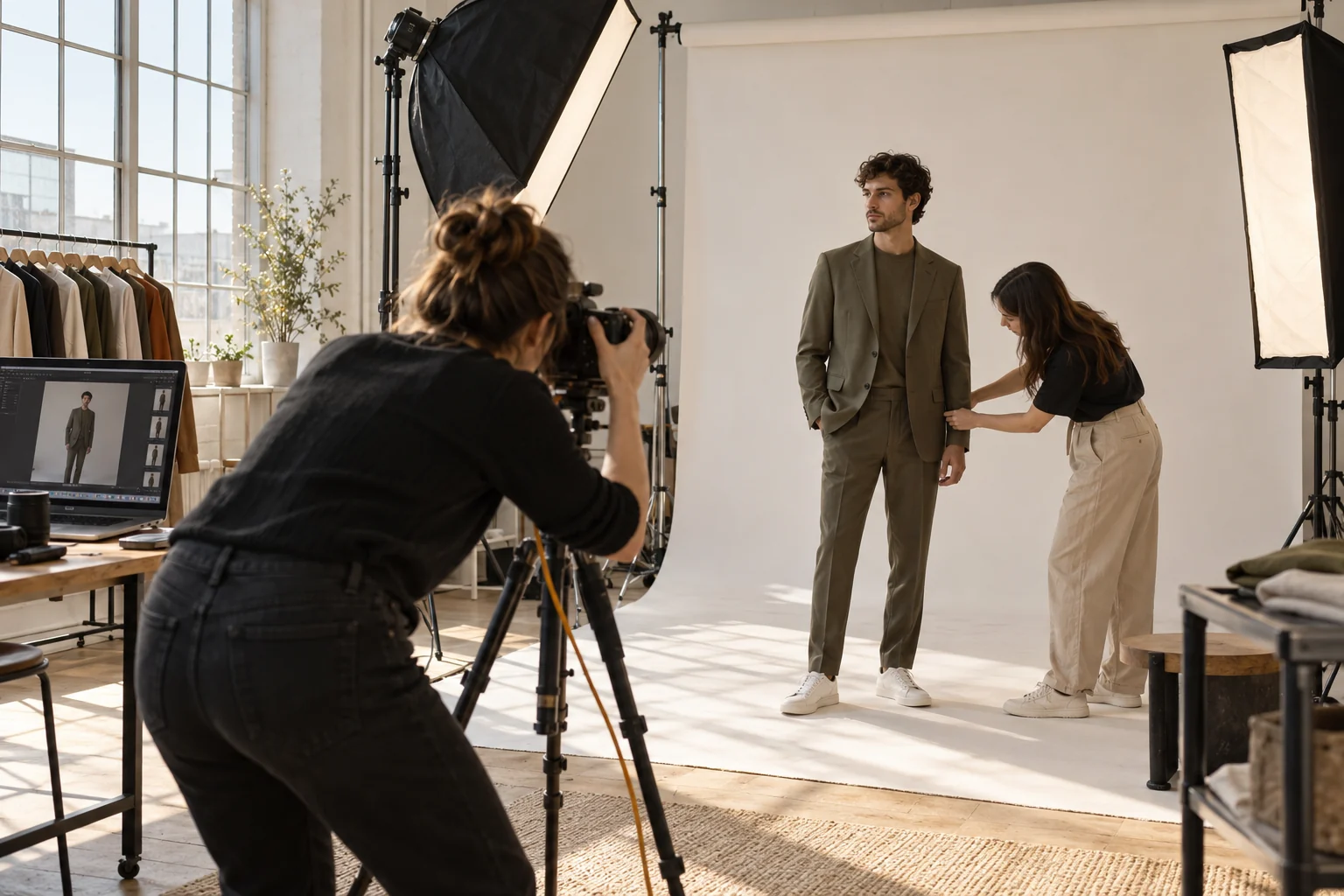
In short. Instagram sells clothing when it answers the customer’s questions before they ask them: how the piece fits, what it is made of, how much it costs and how to buy it. That takes four things: a profile that explains in a few seconds who you are and who you make clothes for; four types of content (the piece on a person, fabric and details, how to wear it, trust in the brand); a short path from a post to an order through WhatsApp or your website; and counting orders, not likes.
I run Dynasty Corporation, a marketing agency in the UAE, and around 97,000 people follow my personal Instagram. Below is what I check in every clothing brand account before recommending advertising.
1. Likes are not orders
A beautiful post can collect hundreds of likes and not a single order. A like costs the customer nothing. An order is when someone writes to you, asks about their size, goes to your website and pays.
That is why the main goal of a brand account is not reach but the path from a post to an order. Reach helps people see you. But if after watching it is unclear how to buy, reach turns into an expense.
2. A profile that sells in a few seconds
Someone who opens your profile for the first time decides in seconds whether to stay or leave. Check:
- Name field. Next to the brand name, add what you do: for example, “Evening dresses Dubai” or “Abayas UAE”. The name field is included in Instagram search.
- Bio. Who you make clothes for, what you sell, where you deliver. One line on what makes you different: that one sentence about your difference.
- Link. To your website, catalogue or WhatsApp: wherever people can buy. Not to an “About us” page.
- Contact buttons. A business profile can show buttons for calling, email and WhatsApp. Customers in the region often write exactly there.
- Pinned posts. Pin what sells: your most popular piece, sizes and delivery, customer reviews.
- Story highlights. “New collection”, “Sizes”, “Delivery and returns”, “Reviews”, “How to order”. These answer the questions that would otherwise land in your DMs.
3. Four types of content that sell clothing
A clothing customer wants to understand how the piece will look on them. So your feed should regularly include:
- The piece on a person. In motion, on people of different body types, in daylight. A mannequin or a flat lay does not show the fit.
- Fabric and details. Close-ups: texture, seams, lining, trims, how the fabric moves. This explains the price better than any text.
- How to wear it. What to pair it with, day and evening looks, one piece styled three ways. This way the customer sees why they need the piece.
- Trust. How the collection is made, who sews it, fittings, how an order is packed, reviews and customer photos, only with their permission.
Separately, answer frequent questions: the size chart, fabric care, delivery times, exchanges. Each answer turned into a post or a story saves dozens of messages.
4. Reels, stories and the feed: each has its own job
- Reels help new people find you. Show the piece from the first second, not your logo. Add on-screen text: many people watch without sound. A short video of how a piece fits or how the fabric moves works better than a long story.
- Stories sell to people who already follow you. New arrivals, remaining sizes, polls on which colour to make, answers to questions, a link to order.
- The feed is your brand’s shop window. People look at it when deciding whether to trust you. Carousels work well for looks, sizes and fabric comparisons.
5. What matters to GCC customers
- Culture and dress code. Show the piece the way it will be worn in the region. If you make modest fashion or abayas, it should be clear at first glance.
- Two languages. In the UAE many people buy in English, but in Saudi Arabia, Kuwait and other GCC countries Arabic often decides. Arabic copy should be written or checked by a native speaker: machine translation lowers trust.
- Climate. Customers want to know whether they will be comfortable in the heat. Say what the fabric is and how it behaves in summer.
- Calendar. Ramadan and Eid, national holidays, the winter season in Dubai. Content and shoots for a season are prepared in advance. More on the region’s calendar in the article “Marketing a Clothing Brand in the UAE and the GCC: Where to Start”.
- Posting time. Do not take it from other people’s advice. Your account insights show when your followers are online: post for them.
6. From post to order: a short path
The more steps between a post and payment, the fewer orders. Check the path through the customer’s eyes:
- Sees the piece in Reels or in the feed.
- Understands the price and sizes, or knows where to find them.
- Taps one button: WhatsApp, DM or a link to the website.
- Gets a quick reply.
- Pays and knows when the order will arrive.
If the price can only be found out by DM, some people will not write. Give a guide: the price in the caption, in a carousel or in the catalogue on your website. For frequent questions about size, price and delivery, prepare saved replies so you answer in minutes, not hours.
7. Collab posts and influencers
- Collab posts. One post appears in two accounts at once: yours and your partner’s, such as a photographer, stylist, boutique or another brand. This way your partner’s followers see you.
- Influencers. Choose by audience, not by follower count: which country their followers are from and whether they buy pieces at your price. Ask for audience statistics before signing.
- Advertising permit in the UAE. Anyone who publishes advertising on social media in the UAE, paid or unpaid, must hold a permit from the UAE National Media Authority. Before signing, ask the influencer for their permit number.
Checked against an official source on 15.11.2026: UAE National Media Authority, permit to publish advertising on social media.
8. How often to post
Consistency matters more than volume. Three posts a week, every week, is better than ten in one week and then a month of silence. Stories almost every day: this is the shortest way to reach people who already follow you.
Make a monthly plan across the four types of content from section 3. This keeps the feed balanced, so it is not only beautiful photos without answers or only discount announcements.
9. What to track every week
Once a week, check in Instagram insights and on your website:
- messages in DMs and WhatsApp: how many people wrote;
- clicks on the link to your website or catalogue;
- orders: how many of those who wrote actually bought;
- saves and shares: they show which content people want to come back to or send to a friend;
- cost per order, if you run ads.
Use tracked links for every link in stories and in your profile: this shows which post brought the customer. After a month you will see which content sells, and you can make more of it.
10. Mistakes that cost sales
- Only beautiful photos. No fit, fabric, price or sizes means no orders.
- A logo instead of the piece in the first seconds of a Reel. People scroll on before they see the product.
- Machine-translated Arabic. It lowers trust more than having no Arabic at all.
- Slow replies in DMs. A customer who waits several hours for an answer goes to another brand.
- Bought followers. They do not buy and they distort your statistics: it becomes impossible to tell what works.
- No tracking. Without tracked links and insights you cannot tell which content brings orders.
How we help
Dynasty Fashion works with designers and clothing brands in the UAE and the GCC, in Dubai and online. We help you build the marketing of a collection: the customer and the offer, content, launch, advertising and measuring results. So that Instagram ads do not eat your whole margin, work out your collection economics in the free calculator.
Frequently asked questions
How do I promote a clothing brand on Instagram in the UAE?
Start with a profile that explains who you are and how to buy. Post four types of content: the piece on a person, fabric and details, how to wear it, and trust. Make the path to an order short through WhatsApp or your website, and count messages, clicks and orders every week.
How many times a week should a clothing brand post?
Consistently: for example, three posts a week and stories almost every day. Consistency matters more than volume.
Which is better for a clothing brand, Reels or photos?
They have different jobs. Reels help new people find you, the feed with photos and carousels is the shop window people use to decide whether to trust you, and stories sell to people who already follow you. You need all three.
Does a clothing brand need Arabic on Instagram?
In Dubai you can start with English. For Saudi Arabia and other GCC countries Arabic is highly advisable, and the copy should be written or checked by a native speaker.
Does an influencer in the UAE need an advertising permit?
Yes. Anyone who publishes advertising on social media in the UAE, paid or unpaid, must hold a permit from the UAE National Media Authority. Ask for the permit number before signing.